
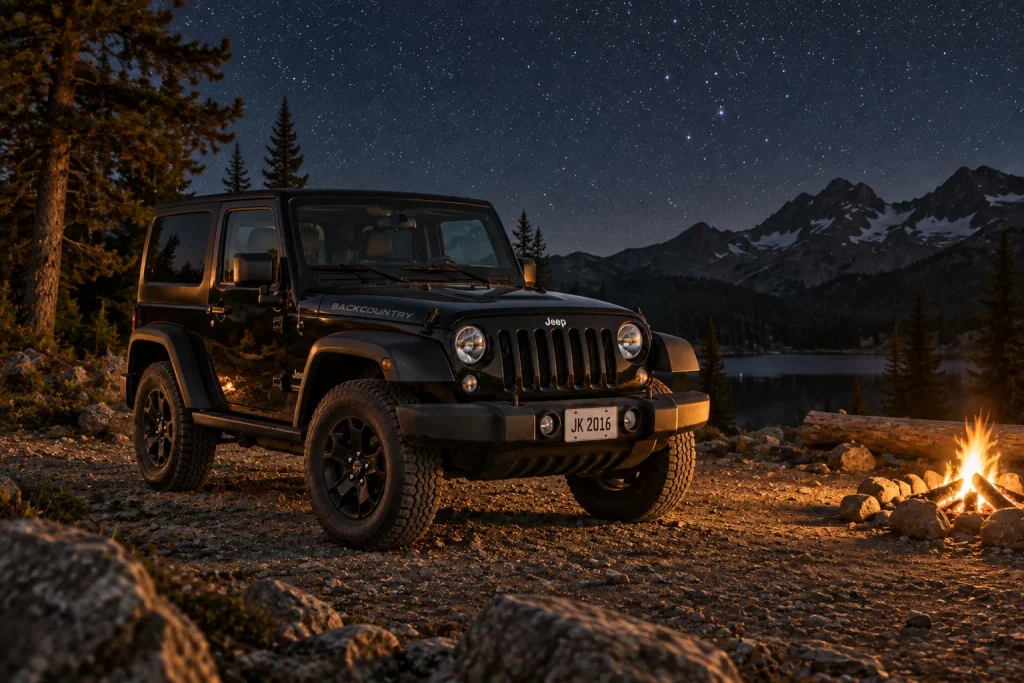
Quick take: The Jeep Wrangler JK (2007–2018) is one of the best-value used off-roaders you can buy — huge aftermarket, strong resale, and genuine trail capability. The keys to a good buy are choosing the right engine era, avoiding a few problem years, and running a proper pre-purchase inspection. This guide walks you through all three, with a checklist you can take to the lot.
How to use this guide
This buyer’s guide helps organize a used-JK evaluation; it does not replace an in-person inspection, title/history review, recall check, or vehicle-specific diagnostic work. A model-year reputation cannot establish the condition of a particular Jeep. Record the configuration and current condition with JK Start Here, then use the First 30 Days Checklist if you buy the vehicle. For 2018 operating and maintenance context, consult the JK Owner’s Manual and Mopar’s maintenance schedule; use the matching documents for other years.
The Two JK Eras: 3.8L vs 3.6L
The single biggest decision is engine era. The 2007–2011 JK uses the 3.8L V6 — dependable but underpowered, and paired with a dated 4-speed automatic. The 2012–2018 JK uses the 3.6L Pentastar V6 — far more power, a 5-speed auto, and much better with larger tires. If you plan to run 33s or 35s, the 3.6L is the smarter long-term buy. See the detailed breakdowns: 2012–2018 (3.6L) and 2007–2011 (3.8L).
Best Years to Buy
- 2015–2018 (3.6L): the most refined JKs — the early head issue is behind them and small improvements accumulated. The safest all-round pick.
- 2012–2014 (3.6L): great value if the cylinder-head recall work was done — verify it.
- 2010–2011 (3.8L): the most sorted of the V6 era, but check the 2011 TIPM.
Years & Things to Be Cautious Of
- 2007: the launch year had the most teething issues — favor a later build.
- Early 2012–2013 (3.6L): some engines had a left cylinder-head failure (ticking then misfire). Confirm whether the head was replaced.
- 2011: TIPM (power module) problems are more common — test all electrical functions.
Trims & Body Styles
- Sport / Sahara vs Rubicon: the Rubicon adds Dana 44 axles front & rear, front and rear lockers, an electronic sway-bar disconnect, and a 4:1 transfer case — a big capability jump if you wheel.
- 2-door vs 4-door (Unlimited): the Unlimited (4-door) rides better, has more room, and holds value well; the 2-door is shorter and more nimble on tight trails.
The Pre-Purchase Inspection Checklist
Tick these off while you inspect the Jeep — it doubles as negotiation leverage. Bring an OBD2 scanner so you can read stored codes on the spot.
What to Pay & How to Negotiate
Prices vary widely by region, mileage, trim, and modifications, so check recent local sold listings rather than any fixed figure. Use this guide’s problem areas as leverage: a JK that needs ball joints, a track bar, or a 3.6L oil-cooler housing is worth less — and you now know exactly what those repairs involve. A modified JK is only worth the premium if the work was done right (proper geometry correction on a lift, quality parts).
Your First Upgrades After Buying
Sort safety and reliability first, then fit and function:
- Address any death wobble and worn steering/suspension parts.
- Planning bigger tires? Run the fitment checker and read the best lift kit and best 35” tires guides.
- Keep the FSM torque & fluid specs handy for DIY maintenance.
Frequently Asked Questions
- Which JK year is most reliable? 2015–2018 (3.6L) overall, with the early-3.6L head issue resolved.
- Is the 3.8L V6 bad? Not bad — just underpowered, especially with big tires. Fine if you keep tires modest or plan to re-gear.
- 2-door or 4-door? 4-door (Unlimited) for daily/family use and resale; 2-door for tight technical trails.
- Is high mileage a dealbreaker? No — a well-maintained, rust-free JK with records beats a low-mileage rusty one.